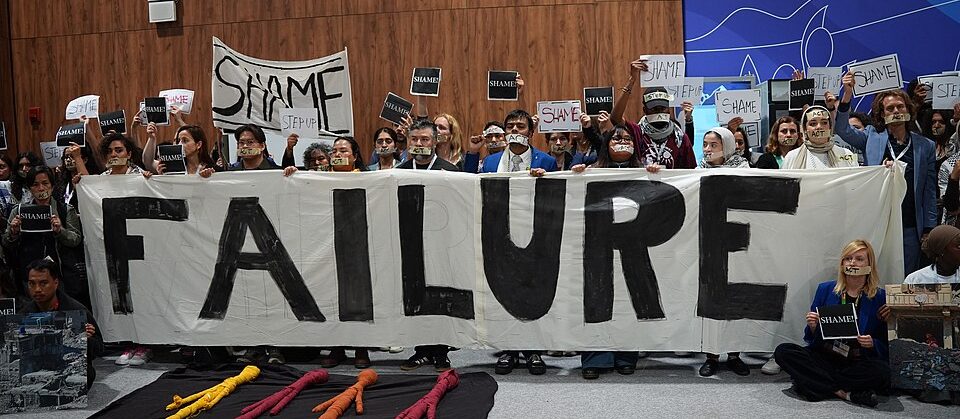
On Sunday 22 November, COP31 – the latest round of United Nations negotiations on climate change – closed without an overarching political deal. The talks in Antalya, Türkiye, that were due to finish on Friday ran almost two days over, making it the longest COP in history. While much of the media coverage has focused on the failure to agree a headline ‘cover text’, discussions and decisions on other important items took place during the two-week negotiations.
Who was there?
Türkiye hosted the summit while Australia held the presidency, a rare split arrangement. More than 92,000 people registered, making it the largest COP on record. For the second year running, the US sent no official delegation, in line with President Trump’s stance against climate action.
UK Prime Minister Andy Burnham was the only G7 leader to attend. In a speech to the COP he reaffirmed the UK’s 2050 net zero target, and named the world’s first climate security envoy, Dame Madeline Alessandri. Also present were the lobbyists. The Kick Big Polluters Out coalition found 103 groups representing industries with an interest in limiting climate action sent delegations to the summit, 60 of them from the fossil fuel industry.
What was on the table?
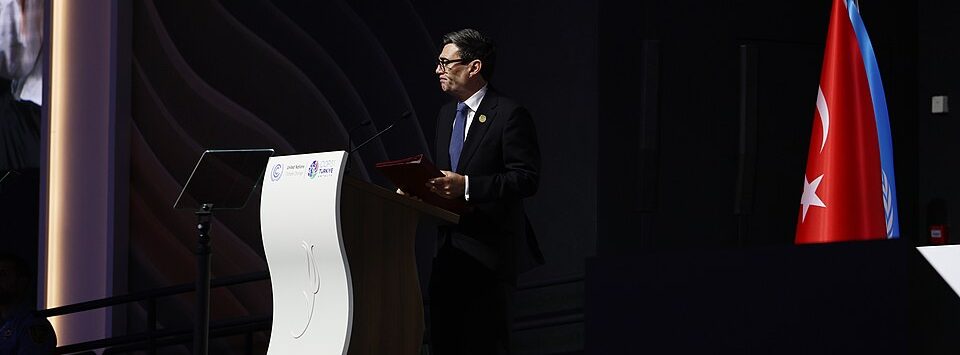
Billed as the ‘implementation COP’ the presidency set out three aims: climate finance for developing countries, electrification and decarbonisation.
Its flagship initiative was the ‘35 by 35’ Global Electrification Pledge, which would raise electricity’s share of final energy use from around 23% today to 35% by 2035. A $156bn annual investment commitment for grid upgrades, renewables and storage came with it, along with a finance coalition to mobilise private investment in economically poorer countries. The proposed pledge was criticised because it did not require that the extra electricity be clean. Countries would choose their own pathways, so this meant coal-generated electricity could still count.
Disappearing commitments
After an initial document compiling the wide range of views from all parties was released on 13 November, the final draft cover agreement text significantly stripped down the ambition. The presidencies’ ‘35 by 35’ electrification goal remained but all references to fossil fuels had been removed. Still included was a commitment to ‘accelerate’ the adoption of Carbon Capture Use and Storage (CCUS), which is widely criticised by campaigners as a ‘false solution’ that simply excuses pollution today with the promise that it will be cleaned up when – and many argue, if – the technology is realised at scale sometime in the future.
The summit reaches deadlock
Countries including Panama objected to this new draft. Panama’s environment minister, Juan Carlos Navarro, wrote to the presidency saying his country would block any outcome that did not meet its demands, including a cap on oil production. Decisions at COP are taken by consensus and so this threat carried real weight. Navarro said delegates were offering “endless oratory” while the planet was being destroyed.
On Sunday, the EU, speaking through Ireland’s Minister for Climate, Energy and the Environment, Darragh O’Brien, formally objected to a draft that did not even mention phasing out fossil fuel use. Nearly 40 countries, including the UK, Canada and the Marshall Islands, objected to the final text. The Marshall Islands’ climate envoy told delegates that her country would not compromise its future for fossil fuel interests.
Many of the countries pushing hardest for stronger language on fossil fuels were those already experiencing the most severe impacts of climate change, reinforcing long-standing arguments that climate negotiations are ultimately questions of justice as well as emissions.
What survived
Although the collapse of the headline agreement dominated attention, several important decisions were still adopted:
- The Adaptation Fund, which provides developing countries with grants to become more resilient to the changing climate, will now automatically receive a 5% share of the proceeds from the carbon trading mechanism set up in the 2015 Paris Agreement, providing a boost to its finances.
- The Just Transition Work Programme had its mandate extended for three years. It seeks to help protect workers and communities as economies move to clean energy.
However, much was left undone and the Mitigation Work Programme, which drives emissions cuts, did not secure agreement. A decision on tripling of adaptation finance was pushed on to COP32 in Ethiopia. COP30 had agreed to triple adaptation finance by 2035 without setting a baseline, and COP31 did not fix that. The UN Secretary-General has warned that even tripling these funds would cover less than 30% of global needs.
While the EU has been praised by some for its role in stopping the insufficient cover decision from passing, in other areas, such as discussions around climate finance, it proved a less willing negotiator. The EU has been the biggest climate finance provider for many years, but refused to agree to any increases in ambition before the meeting in Antalya even began.
A burning planet
This was the first COP since the UN warned that the world is almost certain to exceed 1.5°C of warming. The hope is that even if global temperatures temporarily breach the 1.5°C goal, swift climate action can ensure the world returns back below these levels – an idea called ‘overshoot’.
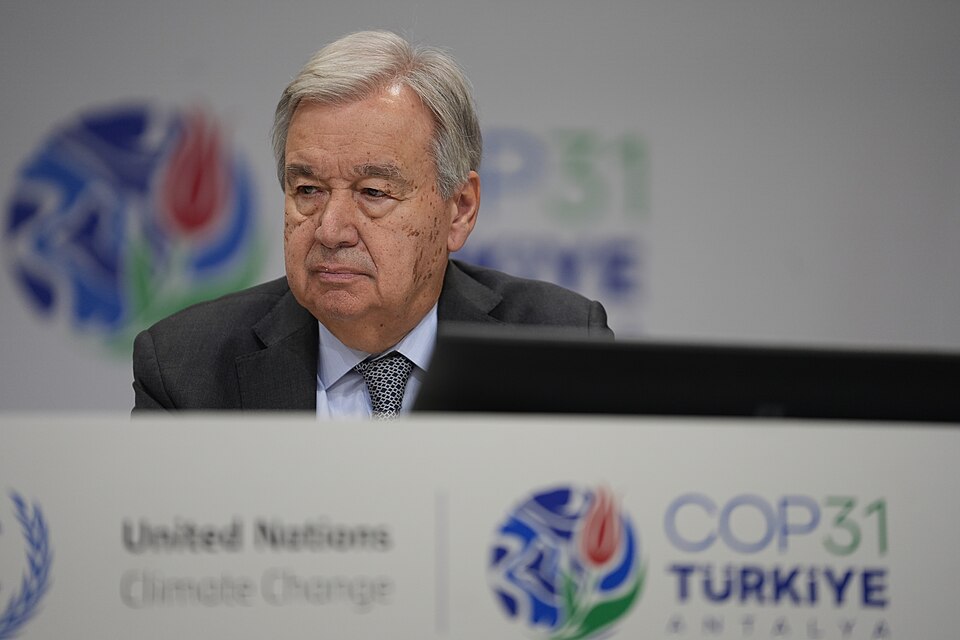
The outgoing UN General-Secretary Antonio Guterres told delegates that current national plans deliver only about a third of the cuts needed to achieve this, and 2026 is on track to be the warmest year on record. As no overarching decision was adopted at COP31, no formal recognition of that overshoot made it into a final text. In his last COP speech in the role, Guterres warned “You cannot build peace on a burning planet.”
Failure to slow temperature rises will have its most severe impacts on those who have contributed least to climate change, from extreme weather and food insecurity to displacement and loss of livelihoods. Throughout COP31, some of the strongest calls for action came from small island states and climate-vulnerable nations, many of whom pointed out that another delay in cutting fossil fuel emissions would carry consequences measured not in political inconvenience but in human lives and futures.
The collapse of the summit’s main agreement therefore raises deeper questions about responsibility, justice, solidarity and whether the international community is willing to act with the urgency that the climate crisis demands.
Can the world wait for consensus?
Depending on whether your glass is half full or half empty, you could view this COP as either a failure of multilateralism or, potentially, a success. A coalition of countries came together and signalled that they were unwilling to compromise on the issue of fossil fuels. This position was strengthened by a year marked by extreme heatwaves across Europe and catastrophic flash floods in Nepal. Climate science continues to identify fossil fuel use as the primary driver of global warming. COP decisions need consensus, and critics argue that petrostates and industry lobbyists use that rule to block action. Supporters of the process point to the separate decisions that passed, and to the 150-plus countries that joined the voluntary electrification package.
However, voluntary pledges are no substitute for a shared commitment to action on the main causes of the crisis. Those who face the worst of it, like the Pacific island nations that rejected this text, have the least time to wait. Their voices serve as a reminder that climate action is ultimately about people, communities and the future we choose to build together.
The global climate action debate now moves onwards towards COP32 in Ethiopia. For churches and faith communities, the questions raised in Antalya will remain: how should responsibility be shared, whose voices are heard, and even if consensus is lacking, what does climate justice require of those of us with the capacity to act?
Sources and further reading
Carbon Brief – Which countries have sent the most delegates to COP31?
The Planet Brief – COP31 agenda, negotiations and updates
‘Profound Frustration’: Reactions Pour in As COP31 Talks Collapse in Turkey | Earth.Org


