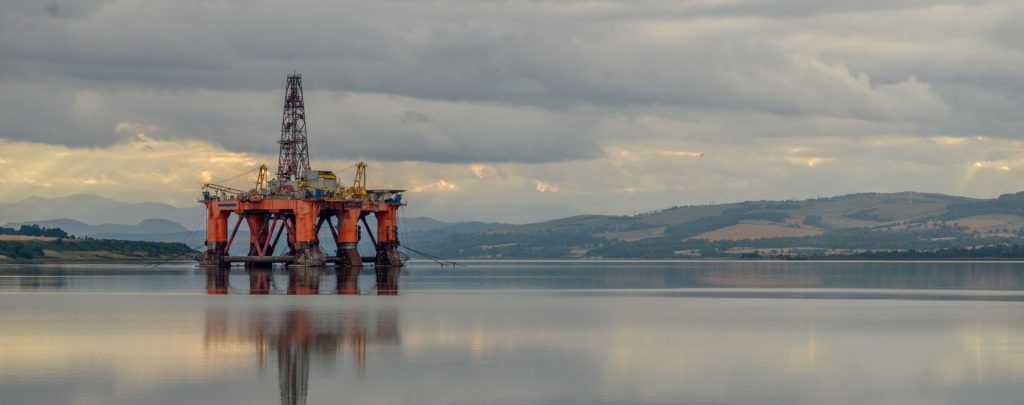
As we leave behind the hottest UK summer on record – and continue to deal with its impacts including drought, crop losses and excess deaths – the UK Government has approved a major new fossil fuel exploitation project in the North Sea, the Jackdaw gas field. Along with the much larger Rosebank oil field, Jackdaw has been the subject of significant discussion, with repeated public calls for both projects to be rejected.
In 2025, leaders from our Churches wrote to the Prime Minister calling for Rosebank to be refused and expressing “deep concern that new oil and gas extraction within existing licenses will now be allowed to progress,” because the continued burning of fossil fuels is the major cause of rising global temperatures.
Originally approved in 2022 and 2023 respectively, Jackdaw and Rosebank were halted after a legal challenge from campaigners. The operating companies were forced to calculate the emissions that would be caused by the burning of the fossil fuels they extracted, rather than just those from the extraction activities themselves, and the Government had to decide whether the emissions were compatible with the UK’s climate targets.
When it took office in 2024, the Labour government announced it would not issue any new licenses for fossil fuel extraction in the North Sea, but these projects had originally been approved before that announcement. A decision on Rosebank is expected in the next few weeks.
Christians are called to seek justice, safeguard future generations and show care to all our neighbours – which includes those who are facing the worst impacts of the climate crisis, and those whose livelihoods depend on the fossil fuel industry. Many from our congregations have been calling on the Government to reject Rosebank and stop new fossil fuel projects.

A dangerous precedent
This decision sets a dangerous precedent. At a time when the instability of the global fossil fuel market is on full display and is impacting finances in households across the country, the Government has approved a project that will continue our reliance on these volatile markets without meaningfully reducing household energy bills.
We mustn’t let the long-term goal of creating a cleaner energy system be undermined by international events. In fact, the fossil fuel price shocks we have seen because of the conflicts in the Middle East and Ukraine provides another reason to hasten the transition from volatile markets towards more secure clean energy.
One of the key arguments made in support of this new field is that it will bolster UK energy security at a time of great international turmoil. However, this decision doesn’t meaningfully change this situation the UK finds itself in. Over its ten-year lifespan, Jackdaw will produce an average of just 2% of the UK’s gas demand.
Turning our backs on our global neighbours
A University College London study published last year concluded that allowing new exploitation of fossil fuels in the North Sea would be incompatible with meeting the UK’s commitments under the Paris Climate Agreement. This echoes calls we’ve heard internationally, saying that if we are serious about keeping global temperature rise within manageable levels, no new fossil fuel projects should be opened.
If Rosebank is approved, the burning of the fossil fuels extracted would emit more than the annual emissions of 28 ‘low-income’ countries combined – including Uganda, Ethiopia and Mozambique. While Jackdaw’s total emissions are smaller, the fact is that every project like this will take the world closer to unmanageable temperature rises and push those already living on the edge further into precarity.
Leaders from some of the world’s most climate-vulnerable countries are calling on the international community to agree to phase out fossil fuel production altogether. Through this approval, the UK Government is weakening its position as a global leader in climate action and signalling that short-term gain is more important that protecting the most vulnerable.
A just transition
The announcement also revealed plans to use the tax revenues earned from the Jackdaw site to accelerate the transition towards net zero. More funding for the transition away from fossil fuels, particularly at a time when reports suggest key household electrification schemes may be cut, is positive – but opening new fossil fuel extraction projects isn’t the only way to generate this funding.
We must also remember that the UK doesn’t live in a bubble. The impacts of this new extraction will be felt around the world and, at a time when UK financial support for economically poorer countries – many of whom will be the most impacted by climate change – is being cut, excusing new drilling by saying you will spend it on domestic support only seeks to address part of the problem.
It’s also important that we also recognise the situation of workers whose jobs rely on North Sea fossil fuel extraction. While the Jackdaw approval is only projected to create 27 full-time jobs directly, there will be indirect jobs created in the supply chain. As we transition away from fossil fuels, we must ensure those who are impacted are considered, and people are supported into new jobs in more future-proof sectors. Neither Jackdaw nor Rosebank will reverse the multi-year decline in fossil-fuel-related jobs in the North Sea, and so serious plans need to be put in place to make sure these communities aren’t left behind.

What can I do?
- Pray that Jackdaw will be the last fossil fuel extraction project given approval in the UK.
- Join the campaign to Stop Rosebank.
